


.svg)



Sandler Sales Training has become a cornerstone methodology for modern sales teams seeking a consultative, problem-solving approach.
With its emphasis on trust, relationship-building, and systematic selling, Sandler equips sales professionals to navigate complex sales cycles with confidence.
But how can you seamlessly integrate the Sandler approach into your sales operations?
Enter Momentum.io, the ultimate platform designed to bring the Sandler Selling System to life.
In today's dynamic business landscape, sales teams are constantly seeking effective strategies to navigate complex sales cycles and achieve sustainable growth.
Sandler Sales Training has emerged as a prominent methodology that challenges traditional sales approaches by shifting the focus from persuasion to problem-solving and partnership.
This article delves into the core principles of Sandler Sales Training, explores its potential benefits for sales teams, and examines its limitations and differences compared to other sales methodologies.
What is Sandler Sales Training?
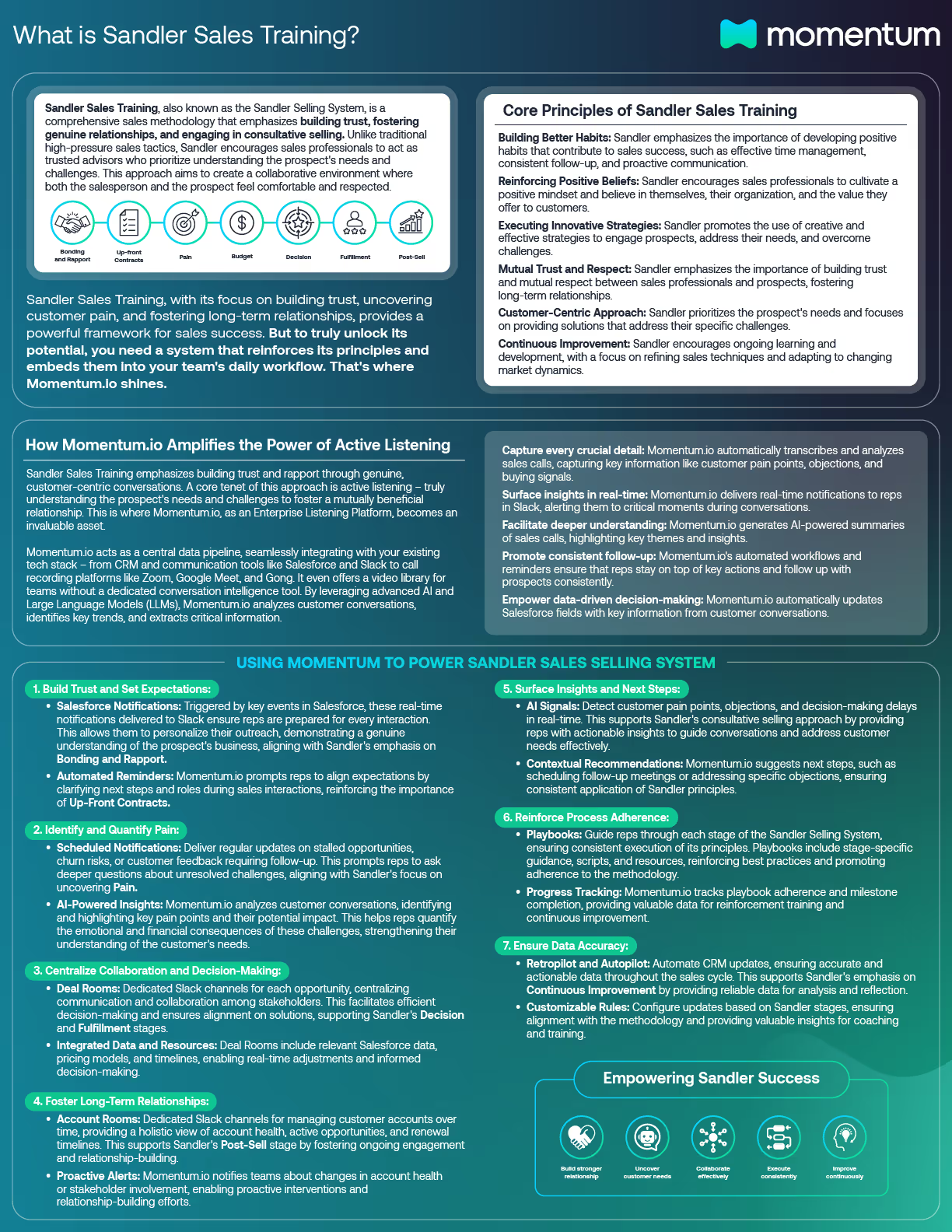
Sandler Sales Training, also known as the Sandler Selling System, is a comprehensive sales methodology that emphasizes building trust, fostering genuine relationships, and engaging in consultative selling.
Unlike traditional high-pressure sales tactics, Sandler encourages sales professionals to act as trusted advisors who prioritize understanding the prospect's needs and challenges.
This approach aims to create a collaborative environment where both the salesperson and the prospect feel comfortable and respected.
The Sandler Selling System is characterized by its unique seven-step process, which guides sales professionals through the entire sales cycle.
These steps include:
- Bonding and Rapport: Establishing a strong connection with the prospect by finding common ground and demonstrating genuine interest.
- Up-front Contracts: Setting clear expectations and establishing ground rules for the sales interaction.
- Pain: Identifying the prospect's pain points and challenges to understand their needs and motivations.
- Budget: Discussing the prospect's budget to ensure alignment with the proposed solution.
- Decision: Evaluating the decision-making process and identifying key stakeholders.
- Fulfillment: Proposing a solution that addresses the prospect's needs and fulfills their expectations.
- Post-Sell: Following up after the sale to ensure customer satisfaction and foster long-term relationships.
The Sandler Submarine
The Sandler Selling System is often visualized as a submarine, with each compartment representing a different stage in the sales process.
This analogy helps illustrate the importance of navigating each stage carefully and avoiding common pitfalls that can sink a deal.
The Sandler Submarine highlights the following key aspects of the sales process:
- Bonding and Rapport: The first compartment represents the crucial initial stage of building a relationship with the prospect.
- Up-front Contracts: The second compartment emphasizes the importance of setting clear expectations and establishing a mutually agreed-upon framework for the sales interaction.
- Qualification: The third compartment focuses on qualifying the prospect by uncovering their pain points, understanding their budget, and identifying their decision-making process.
- Closing: The final compartment represents the closing stage, where the salesperson presents a solution that addresses the prospect's needs and guides them towards a decision.
The Sandler Submarine analogy serves as a reminder that successful selling requires a systematic and disciplined approach, with a focus on building relationships, qualifying prospects, and addressing their needs effectively.
Core Principles of Sandler Sales Training
Sandler Sales Training is built on a foundation of key principles that guide its approach to selling. These principles include:
- Building Better Habits: Sandler emphasizes the importance of developing positive habits that contribute to sales success, such as effective time management, consistent follow-up, and proactive communication. For example, Sandler encourages sales professionals to establish a daily routine that includes activities like prospecting, lead qualification, and follow-up calls.
- Reinforcing Positive Beliefs: Sandler encourages sales professionals to cultivate a positive mindset and believe in themselves, their organization, and the value they offer to customers. This includes focusing on past successes, visualizing positive outcomes, and maintaining a confident attitude throughout the sales process.
- Executing Innovative Strategies: Sandler promotes the use of creative and effective strategies to engage prospects, address their needs, and overcome challenges. This might involve using storytelling to connect with prospects, tailoring presentations to specific needs, or employing reverse questioning techniques to uncover hidden objections.
- Mutual Trust and Respect: Sandler emphasizes the importance of building trust and mutual respect between sales professionals and prospects, fostering long-term relationships. This involves active listening, honest communication, and a genuine interest in understanding the prospect's perspective.
- Customer-Centric Approach: Sandler prioritizes the prospect's needs and focuses on providing solutions that address their specific challenges. This means asking insightful questions, actively listening to their concerns, and tailoring the sales process to their individual buying journey.
- Continuous Improvement: Sandler encourages ongoing learning and development, with a focus on refining sales techniques and adapting to changing market dynamics. This is achieved through ongoing training, peer-to-peer learning, and self-reflection.
Reinforcement Training
A key aspect of Sandler Sales Training is its emphasis on reinforcement training.
This involves ongoing coaching, feedback, and practice to help sales professionals internalize the Sandler principles and techniques.
Reinforcement training helps ensure that sales professionals continue to develop their skills and improve their performance over time.
Sandler's reinforcement training strategy includes a continuous improvement journey, which allows sales professionals to evaluate progress and recalculate their course if necessary.
This ongoing support and guidance help sales professionals achieve higher levels of success and maintain their competitive edge.
Sandler Sales Training, with its focus on building trust, uncovering customer pain, and fostering long-term relationships, provides a powerful framework for sales success.
But to truly unlock its potential, you need a system that reinforces its principles and embeds them into your team's daily workflow. That's where Momentum.io shines.
Listen to Win with Sandler: How Momentum.io Amplifies the Power of Active Listening
Sandler Sales Training emphasizes building trust and rapport through genuine, customer-centric conversations.
A core tenet of this approach is active listening – truly understanding the prospect's needs and challenges to foster a mutually beneficial relationship.
This is where Momentum.io, as an Enterprise Listening Platform, becomes an invaluable asset.
Imagine a system that could not only capture every customer interaction across your organization but also analyze those conversations to extract valuable insights and deliver them to your sales team in real-time.
That's the power of Momentum.io.
Momentum.io acts as a central data pipeline, seamlessly integrating with your existing tech stack – from CRM and communication tools like Salesforce and Slack to call recording platforms like Zoom, Google Meet, and Gong. It even offers a video library for teams without a dedicated conversation intelligence tool.
By leveraging advanced AI and Large Language Models (LLMs), Momentum.io analyzes customer conversations, identifies key trends, and extracts critical information.
Here's how Momentum.io enhances Sandler's principles of active listening and customer-centricity:
- Capture every crucial detail: Momentum.io automatically transcribes and analyzes sales calls, capturing key information like customer pain points, objections, and buying signals . This ensures that no valuable insight is missed, empowering reps to tailor their approach and address customer needs effectively.
- Surface insights in real-time: Momentum.io delivers real-time notifications to reps in Slack, alerting them to critical moments during conversations . This allows them to respond proactively, address concerns immediately, and demonstrate active listening.
- Facilitate deeper understanding: Momentum.io generates AI-powered summaries of sales calls, highlighting key themes and insights . This helps reps gain a deeper understanding of the customer's needs and tailor their approach accordingly.
- Promote consistent follow-up: Momentum.io's automated workflows and reminders ensure that reps stay on top of key actions and follow up with prospects consistently . This reinforces the Sandler principle of building long-term relationships through consistent engagement.
- Empower data-driven decision-making: Momentum.io automatically updates Salesforce fields with key information from customer conversations . This ensures data accuracy and provides valuable insights for coaching and continuous improvement.
By amplifying the power of active listening, Momentum.io helps sales teams execute the Sandler Selling System with greater precision and effectiveness, leading to stronger customer relationships and increased sales success.
Using Momentum to Power Sandler Sales Selling Systems
Momentum.io's AI-powered features seamlessly integrate with the Sandler Selling System, empowering sales teams to execute each stage with precision and consistency. Here's how:
1. Build Trust and Set Expectations:
- Salesforce Notifications: Triggered by key events in Salesforce, these real-time notifications delivered to Slack ensure reps are prepared for every interaction. This allows them to personalize their outreach, demonstrating a genuine understanding of the prospect's business, aligning with Sandler's emphasis on Bonding and Rapport.
- Automated Reminders: Momentum.io prompts reps to align expectations by clarifying next steps and roles during sales interactions, reinforcing the importance of Up-Front Contracts.
Example: A rep receives a notification that a prospect has downloaded a case study on a specific pain point. This prompts the rep to reach out and initiate a conversation, demonstrating proactive engagement and aligning with Sandler's customer-centric approach.
2. Identify and Quantify Pain:
- Scheduled Notifications: Deliver regular updates on stalled opportunities, churn risks, or customer feedback requiring follow-up. This prompts reps to ask deeper questions about unresolved challenges, aligning with Sandler's focus on uncovering Pain.
- AI-Powered Insights: Momentum.io analyzes customer conversations, identifying and highlighting key pain points and their potential impact. This helps reps quantify the emotional and financial consequences of these challenges, strengthening their understanding of the customer's needs.
Example: A rep receives a weekly notification highlighting accounts with declining engagement. This prompts the rep to proactively reach out and uncover potential challenges, addressing them before they escalate.
3. Centralize Collaboration and Decision-Making:
- Deal Rooms: Dedicated Slack channels for each opportunity, centralizing communication and collaboration among stakeholders. This facilitates efficient decision-making and ensures alignment on solutions, supporting Sandler's Decision and Fulfillment stages.
- Integrated Data and Resources: Deal Rooms include relevant Salesforce data, pricing models, and timelines, enabling real-time adjustments and informed decision-making.
Example: A Deal Room for a key opportunity allows the rep to share proposals, gather feedback, and address objections in a centralized space, ensuring all stakeholders are aligned on the solution and its value.
4. Foster Long-Term Relationships:
- Account Rooms: Dedicated Slack channels for managing customer accounts over time, providing a holistic view of account health, active opportunities, and renewal timelines. This supports Sandler's Post-Sell stage by fostering ongoing engagement and relationship-building.
- Proactive Alerts: Momentum.io notifies teams about changes in account health or stakeholder involvement, enabling proactive interventions and relationship-building efforts.
Example: An Account Room for a key client flags a drop in their health score. This prompts the rep to proactively schedule a check-in call, address potential concerns, and reinforce the customer relationship.
5. Surface Insights and Next Steps:
- AI Signals: Detect customer pain points, objections, and decision-making delays in real-time. This supports Sandler's consultative selling approach by providing reps with actionable insights to guide conversations and address customer needs effectively.
- Contextual Recommendations: Momentum.io suggests next steps, such as scheduling follow-up meetings or addressing specific objections, ensuring consistent application of Sandler principles.
Example: AI Signals detect that a prospect is hesitant about the budget. This prompts the rep to proactively address their concerns, explore potential solutions, and guide them towards a decision.
6. Reinforce Process Adherence:
- Playbooks: Guide reps through each stage of the Sandler Selling System, ensuring consistent execution of its principles. Playbooks include stage-specific guidance, scripts, and resources, reinforcing best practices and promoting adherence to the methodology.
- Progress Tracking: Momentum.io tracks playbook adherence and milestone completion, providing valuable data for reinforcement training and continuous improvement.
Example: A Playbook for the "Pain" stage prompts the rep to ask specific questions about customer challenges and document their responses, ensuring a consistent and thorough approach to uncovering needs.
7. Ensure Data Accuracy:
- Retropilot and Autopilot: Automate CRM updates, ensuring accurate and actionable data throughout the sales cycle. This supports Sandler's emphasis on Continuous Improvement by providing reliable data for analysis and reflection.
- Customizable Rules: Configure updates based on Sandler stages, ensuring alignment with the methodology and providing valuable insights for coaching and training.
Example: After a discovery call, Autopilot automatically updates the "Pain Points" field in Salesforce with key challenges mentioned by the customer, ensuring this information is readily available for future interactions and analysis.
Momentum.io: Empowering Sandler Success
By integrating seamlessly with the Sandler Selling System, Momentum.io empowers your sales team to:
- Build stronger relationships: Foster trust and rapport through personalized interactions and proactive engagement.
- Uncover customer needs: Identify and quantify pain points with AI-powered insights and targeted questions.
- Collaborate effectively: Centralize communication and decision-making with Deal Rooms and Account Rooms.
- Execute consistently: Reinforce process adherence with Playbooks and automated workflows.
- Improve continuously: Ensure data accuracy and gain valuable insights for coaching and training.
With Momentum.io, you can transform your Sandler Sales Training into a data-driven, efficient, and scalable process that delivers exceptional results.
---------
Momentum.io: The Ultimate Sandler Selling Companion
Momentum.io isn’t just a tool—it’s a partner in bringing Sandler principles to life.
By integrating Salesforce Notifications, Deal Rooms, AI Signals, Playbooks, and more, Momentum.io empowers sales teams to execute the Sandler methodology with precision and confidence.
Ready to revolutionize your sales process?
Request a demo today and see the impact of Momentum.io on your Sandler journey.