

Features
Product
Detect lost deals, feedback, and churn causes, then automate fixes.
Automate post-call tasks—update Salesforce, save notes, and sync data.
Sales and CS focus on revenue—Momentum handles admin.
Sales and CS focus on revenue—Momentum handles admin.
Automatically turns key call moments into short, shareable video snippets.
Analyzes all deal data in conversations and CRM to surface insights across the entire customer journey.
Integrates with your team's tools to automate and streamline processes.
Features
.svg)

Week in the life of a
Chief Revenue Officer
The average CRO spends their week as a "Chief Firefighter," chasing data for board decks and reacting to late-stage surprises. See how top revenue leaders at Zscaler, Ramp, and Demandbase use Momentum to shift from pipeline defense to Growth Architecture, using AI Signals and Deep Research to prevent churn and drive strategy.
1. Morning Forecast Review
.svg)
Before Momentum
Incomplete, Manual, Lagging
.avif)
- CRO starts the day buried in Salesforce dashboards, spreadsheets, and rep anecdotes.
- Renewal and expansion forecasts rely on self-reported notes, often stale or inaccurate.
- Risk surfaces too late, board decks lack hard evidence.
.svg)
After Momentum
Live, Signal-Backed Forecasts
.avif)
- Autopilot syncs deal stages, next steps, and competitor mentions directly from calls/emails.
- Forecasts tied to real buying signals, not opinions.
- Slack rollups show “Top risks flagged this week: $4.7M of pipeline with cagey buyer signals.”
- CRO starts day with confidence → no blind spots.
- Clear understanding of risks in deals
2. Pipeline Quality & Rep Accountability
Before Momentum
Pipeline Bloat & Guesswork
.avif)
- CRO spends exec reviews cutting through “happy ears.”
- Reps forget to log competitor mentions, budget details, or next steps.
- Coaching moments buried in Gong, never surfaced.
After Momentum
AI-Powered Assist + Real-Time Signal Capture
.avif)
- Talk track adherence automation: “Rep didn’t mention 5% service fee” flagged instantly.
- CRM autofill across Opportunity, Account, Contact, Event objects → no missing fields.
- CRO sees at a glance which reps follow process, and where pipeline inflation exists.
Effect
Forecast trust restored, coaching based on data, not gut.
3. Midday Exec & Board Alignment
Before Momentum
Deck-Building Fire Drills
.avif)
- CRO spends hours each week preparing board decks.
- Data scattered across RevOps, Product, CS.
- Strategic questions (“Where are we losing?”) answered weeks late.
After Momentum
Executive Briefs + Deep Research
.avif)
- Deep Research Briefs auto-generated.
- Trends and changes over time (minimize memory loss)
- Deep Research: CRO + RevOps can run root-cause analyses across thousands of deals.
- “Compare win rates by segment, competitor, and exec involvement.”
- Visual outputs: heatmaps, trend charts.
- CRO has living, interactive intelligence at their fingertips.
4. Afternoon Customer Success & Revenue Continuity
Before Momentum
Sales → CS Handoff Gaps
.avif)
- CRO frustrated by churn from missed onboarding context.
- CS inherits customers with no clear record of commitments.
- CRO pulled into late-stage escalations.
After Momentum
Seamless Handoff + Slack Rooms
.avif)
- CS Briefs auto-generated at Closed Won with champions, pricing, success criteria.
- CRO sees churn risk drop as customers onboard smoothly.
- Sales + CS + Product aligned in shared Slack rooms, no info gaps.
Effect
CRO ensures revenue continuity → no more “post-sale surprises.”
5. Competitive & Market Intelligence
Before Momentum
Disconnected, Reactive Intelligence
.avif)
- Competitive mentions buried in call notes (if logged at all).
- CRO waits for quarterly enablement reviews to react.
- Product team flying blind on feature gaps.
After Momentum
Real-Time Signal Routing
.avif)
- Competitor mentions auto-logged in CRM, routed to PMs.
- Product feedback detection
- CRO has live pulse of the market → competitor shifts, pricing battles, product gaps.
6. Risk & Escalation Management
Before Momentum
CRO = Chief Firefighter
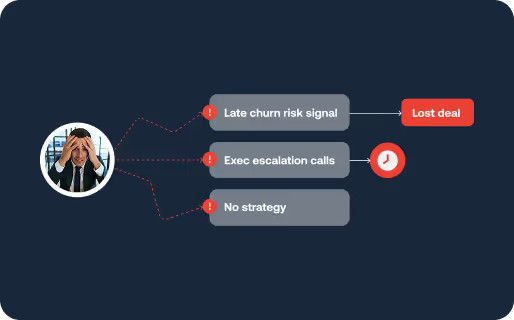
- Risks surface when deals are already lost or renewals about to churn.
- Exec escalation calls consume hours weekly.
- CRO reactive instead of strategic.
After Momentum
AI Signal Detection + RetroPilot

- “Cagey Buyer” signal detection alerts CRO early when disengagement patterns appear.
- RetroPilot analysis churn patterns quarterly → institutional learning.
- CRO spends time preventing fires, not fighting them.
7. Coaching & Rep Productivity
Before Momentum
Coaching Limited to Anecdotes
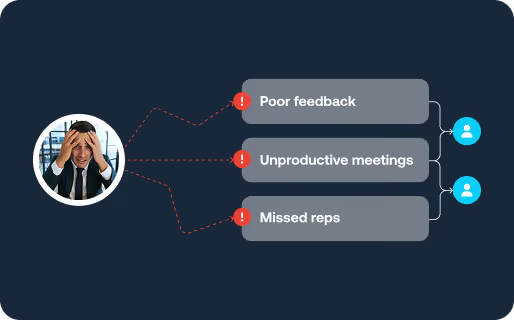
- CRO has no audit-grade view of coaching quality.
- Hours wasted in unproductive internal meetings.
- Top performers not scaled, weak reps missed until too late.
After Momentum
Audit-Grade Coaching Metrics
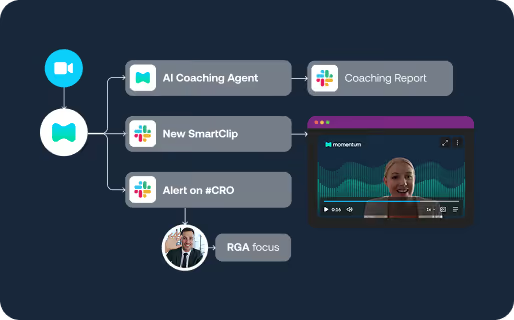
- Prompt-driven coaching reports score every rep by competencies.
- Smart Clips highlight best calls → reusable in onboarding.
- CRO ensures 25–30% more rep time spent in revenue-generating activity (RGA).
8. Strategic Seat at the Table
Before Momentum
CRO Defending GTM as “Cost Center”
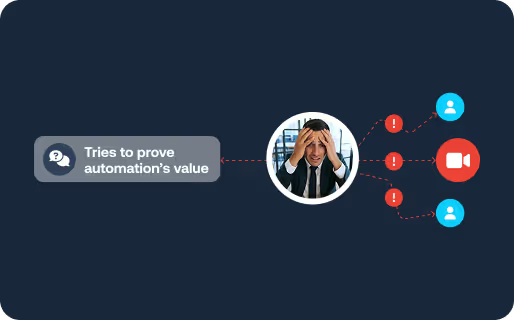
- Conversations with CEO/CFO framed around costs, not outcomes.
- CRO struggles to prove automation’s value.
After Momentum
CRO as Growth Architect
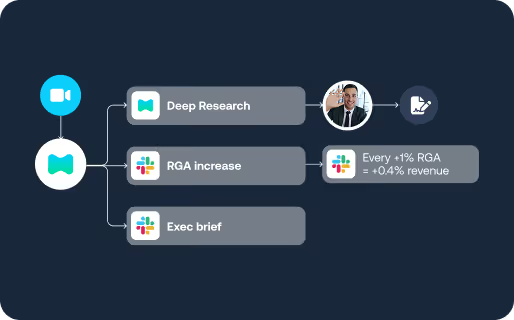
- RGA increases tied directly to revenue impact.
- CRO quantifies: “We lifted RGA from 25% to 35% → $2M annual revenue gain.”
- With Deep Research, CRO pushes strategy further:
- “Which markets, motions, or competitor battles deserve more investment?”
- Recurring reports delivered to CEO, CFO, Board.
Effect
CRO leads as a revenue scientist, not just revenue operator.
9. Product Feedback & Market Signals → Revenue Protection
Before Momentum
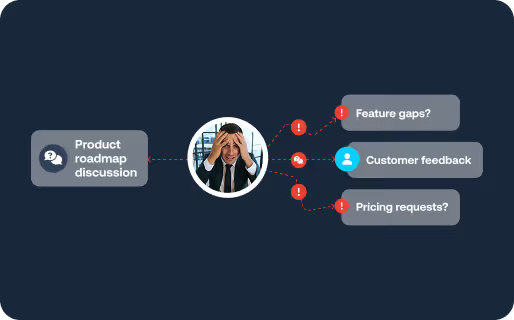
- Feedback fragmented, surfaced quarterly.
- CRO can’t quantify how feature gaps or pricing requests affect win rate.
- Product roadmap discussions lack revenue-backed evidence.
After Momentum
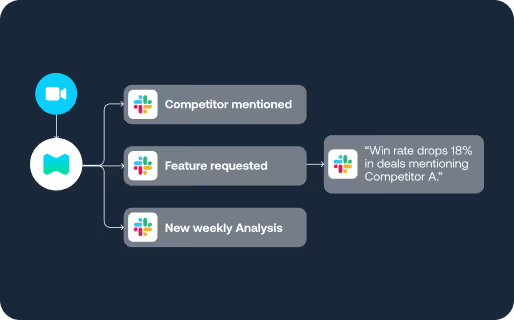
- Competitive mentions and feature requests auto-captured across calls, logged to CRM.
- CRO sees Weekly analysis
Effect
CRO ties product asks directly to revenue outcomes and can justify roadmap priorities with data-driven impact.
10. Methodology Adoption → ACV Growth
Before Momentum
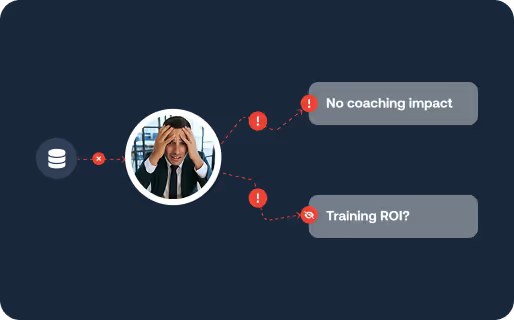
- CRO invests in SPICED/MEDDPICC but has no visibility on adoption.
- Coaching impact anecdotal, not tied to revenue.
- Training ROI invisible at the board level.
After Momentum

- Coaching agent measures adherence.
- CRO correlates adherence with ACV lift.
Effect
CRO connects methodology adoption to revenue expansion and uses data to reinforce enablement investments.
11. Enablement ROI → Revenue Efficiency
Before Momentum
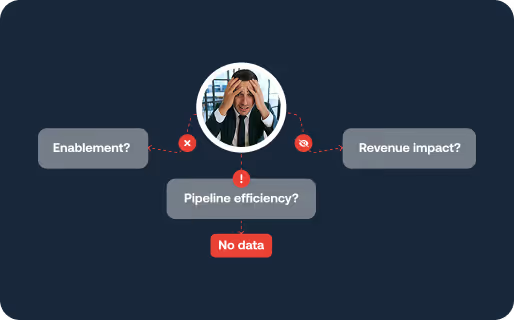
- CRO spends millions on enablement with no line of sight to revenue impact.
- CFO sees enablement as cost center.
- Pipeline efficiency (RGA vs admin) is unmeasured.
After Momentum
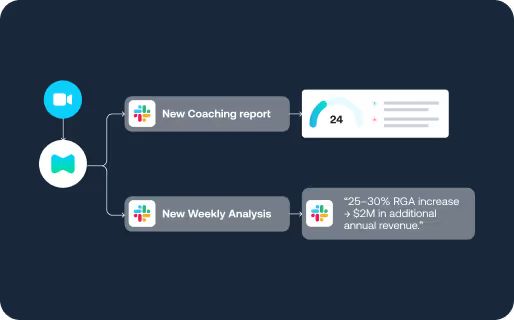
- Weekly coaching reports show rep competency scores tied to revenue-generating activity.
- CRO quantifies: “25–30% RGA increase → $2M in additional annual revenue.”
Effect
CRO proves enablement spend delivers measurable ROI, reframing the budget as a growth driver, not overhead.
12. CRO Decision-Making
→ Board-Level Strategy
Before Momentum
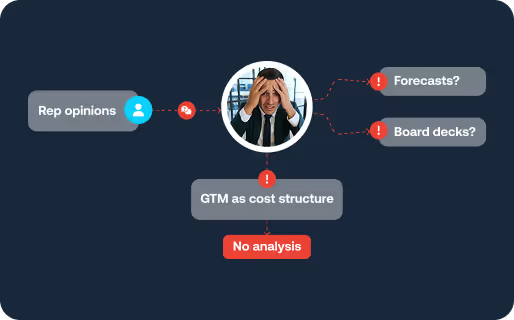
- Forecasts rely on rep opinions.
- Board decks lag by weeks, lacking granular insights.
- CRO defends GTM as a cost structure instead of proving growth science.
After Momentum
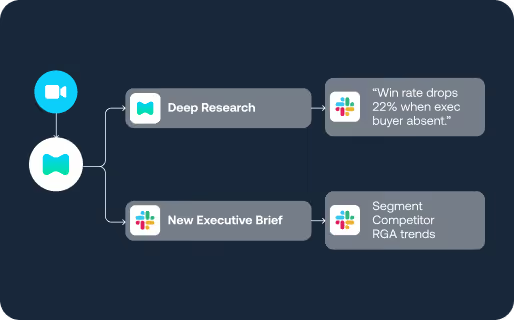
- Deep Research surfaces deal patterns.
- Executive Briefs auto-generated weekly with segment, competitor, and RGA trends.
Effect
CRO makes board decisions on real-time revenue science, positioning GTM as a predictable growth engine.
13. Sales-Centric CRO (0–50M ARR)
Before Momentum
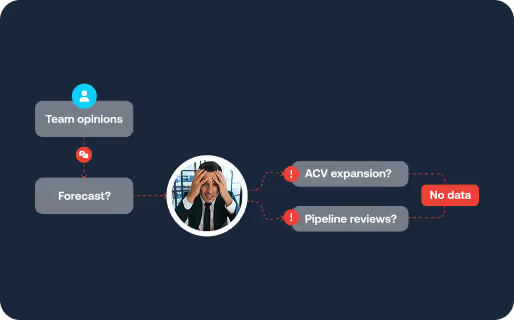
- Forecasts padded by “happy ears.”
- Pipeline reviews rely on anecdotal notes.
- ACV expansion hard to measure, most deals treated the same.
After Momentum
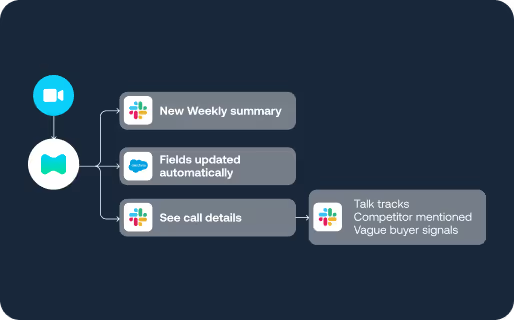
- Deep Research surfaces deal patterns.
- Executive Briefs auto-generated weekly with segment, competitor, and RGA trends.
Effect
CRO makes board decisions on real-time revenue science, positioning GTM as a predictable growth engine.
14. Scaling CRO (50–100M ARR)
Before Momentum

- CS handoff gaps lead to churn and revenue leakage.
- Competitor and product signals surface too late for strategy.
- Enablement spend seen as overhead.
After Momentum
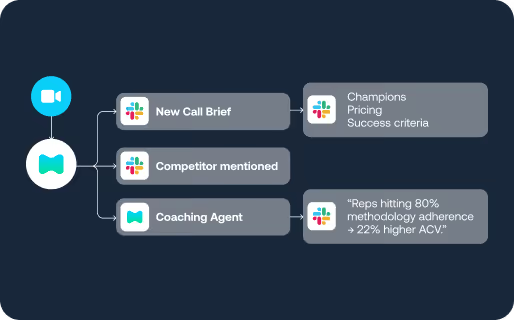
- CS briefs auto-generated with champions, pricing, success criteria.
- Competitive and product requests routed live, tied to revenue outcomes.
- Coaching agent shows correlation.
Effect
CRO quantifies enablement ROI, reduces churn risk, aligns Product and GTM decisions to revenue science.
15. Enterprise CRO (100M+ ARR)
Before Momentum

- Board conversations framed around cost, not outcomes.
- Strategic bets (market entry, pricing, enablement) lack aggregated evidence.
- Risk patterns only discovered after revenue is lost.
After Momentum
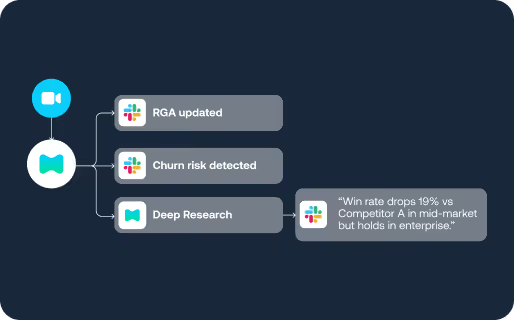
- Deep Research runs multi-segment analysis: “Win rate drops 19% vs Competitor A in mid-market but holds in enterprise.”
- RetroPilot identifies churn themes quarterly, driving proactive enablement.
- RGA tracked and tied directly to revenue lift: “RGA +10% → $4M incremental revenue.”
Effect
CRO positions GTM as growth science, quantifies board-level ROI, and influences product and market strategy with live aggregated data.
Strategic Outcomes
for CROs
Focus
Before Momentum
After Momentum
Forecasting
Manual, lagging, rep-driven
Signal-backed, auto-synced, board-ready
Pipeline
Inflated, anecdotal
CRM autofilled, adherence measured
Exec Reporting
Fire drills
Auto-briefs + Deep Research (vision)
CS Continuity
Risky handoffs
Auto CS Briefs + Slack Rooms
Competitive Intel
Reactive, quarterly
Real-time, auto-routed
Risk Mgmt
Surprises & firefighting
AI signals + RetroPilot prevention
Coaching
Anecdotal
Audit-grade coaching metrics
Strategy
CRO = cost defense
CRO = growth architect
Stop Managing by Intuition.
Start Leading with Momentum.